Donna Busa, East Hartford High School, East Hartford Public Schools
 Donna Busa, a veteran mathematics teacher for 25 years and a current teacher at East Hartford Public High School, is an example of a committed leader dedicated to lifelong learning, professional growth, and service to students and teachers. A Noyce Math Teacher Leader since 2024, Donna has built a distinguished career spanning classroom teaching, curriculum development, teacher mentorship, and educational leadership across Connecticut.
Donna earned her bachelor’s degree in mathematics with a concentration in computer science before completing her Master of Science degree and her sixth-year certification in math educational leadership. Donna has taught a wide range of mathematics courses and supported students at multiple grade levels and educational settings. Early in her career, she contributed to district-wide improvement efforts through curriculum writing, teacher mentoring, and the development of math programs and assessments. Her leadership continued through positions in Hartford and South Windsor, where she supported colleagues, led instructional initiatives, and contributed to mathematics education across diverse learning communities.
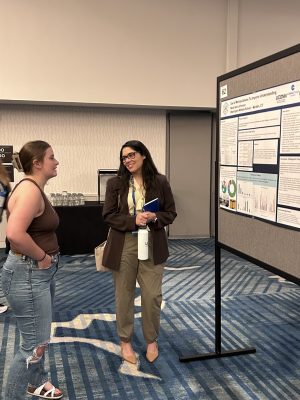
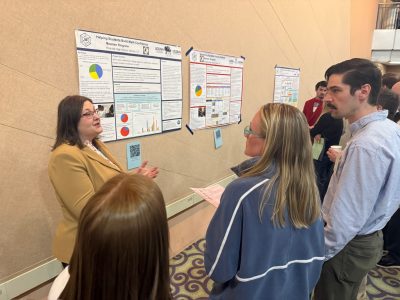
Donna later expanded her impact through instructional coaching, where she developed curriculum resources, coached teachers, and facilitated district-level professional learning on effective curriculum design. Her commitment to supporting current and future educators also led her to serve as a Foundations of Teaching Instructor for Connecticut’s Alternate Route to Certification (ARC) Program. In recognition of her excellence in teaching, Donna was named a Connecticut finalist for the Presidential Award for Excellence in Mathematics and Science Teaching (PAEMST) in 2015. Since 2023, Donna has taught at East Hartford High School while continuing her work as a teacher leader and advocate for equitable mathematics education. Donna’s passion for expanding spaces for diverse math instructors led her to investigate her independent leadership project, Uncounted Voices: Exploring the Lack of Diversity in Math Teaching. Through this project, Donna broadened her understanding of the lack of diversity in the field of math teaching by listening to each unique story from math teachers of color who are participating in her study. She has presented her work to inform Noyce MTL’s collective understanding of the issue, as well as to many of Connecticut’s educational leaders at the 2025 Alliance District Symposium.
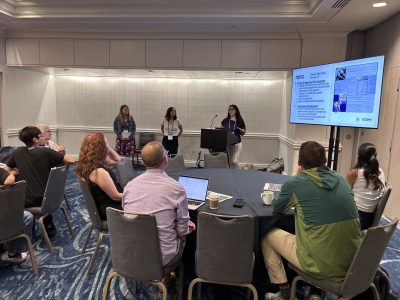
Donna also collaborated with other Noyce Fellows to develop the webinar “Math Pathways to College and Career Readiness,” a video that  advocates for accessible, relevant, and rigorous mathematics pathways for all students. The webinar is posted on the Connecticut State Department of Education website to help inform educators, parents and guardians, school and state leaders on what mathematics pathways are, why they matter for equitable education, and how they can be implemented with fidelity. Donna co-presented this work at the 2026 Associated Teachers of Mathematics in Connecticut (ATOMIC) Conference in New Haven.
Donna’s ongoing commitment to teaching, mentoring, and educational leadership continues to strengthen mathematics learning opportunities for students and educators throughout Connecticut.
 Loading...

 Reload document
  Open in new tab
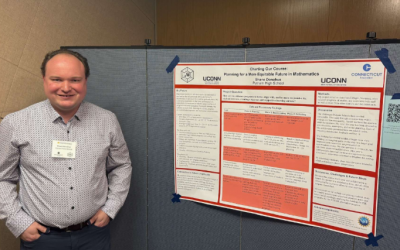
 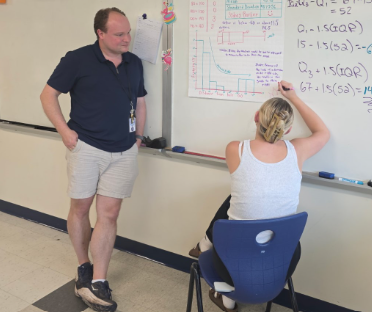 Shane joined the CT Noyce Math Teacher Leaders program in 2024. A devoted teacher and a tireless community advocate, Shane Donahue has spent the past 11 years teaching mathematics at Putnam High School (PHS) in Putnam, Connecticut. Since earning his Master of Arts in Teaching Mathematics, Shane has taught every mathematics course offered at PHS, including dual enrollment courses in calculus, statistics, economics, and manufacturing. Shane was instrumental in establishing Putnam High School’s dual enrollment classes, as he coordinated student enrollment, instructor certification, and initiated the relationship with the University of Connecticut.
 He
He 
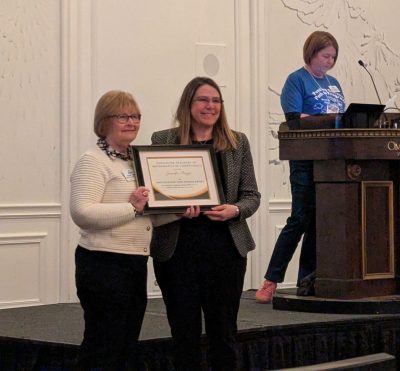 Jen Roggi, veteran mathematics teacher at Vernon Center Middle School in Vernon, Connecticut, was recently honored at the 2026 Associated Teachers of Mathematics in Connecticut (ATOMIC) Conference with the Charlene Tate Nichols Pre-K–8 Award!
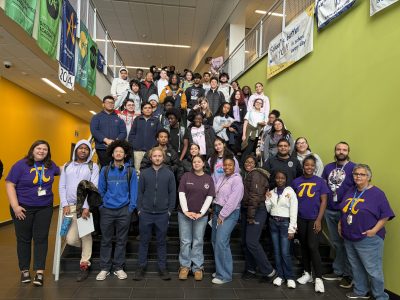
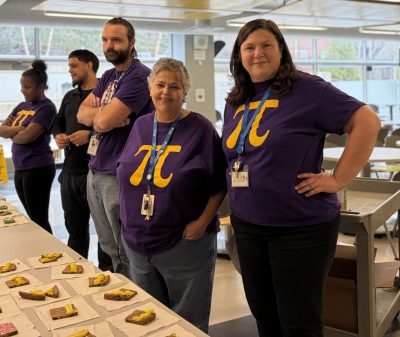 Leigh’s leadership extends well beyond her classroom. She serves as the mathematics department lead at Pathways Academy, coordinating departmental initiatives, supporting colleagues, and helping guide instructional decision-making. Leigh is a TEAM mentor and cooperating teacher, supporting the development of new educators entering the profession. Additionally, Leigh is hosting a UConn Neag Master’s intern for AY 25 – 26, in which she is supporting, mentoring, and collaborating with her intern as part of their master’s year change project. Leigh regularly facilitates professional development for teachers across the district, including a series focused on equitable grading and Building Thinking Classrooms strategies. Leigh was selected as Pathways Academy’s Teacher of the Year in 2022 and regularly hosts mathematics-centric events at her school, including but not limited to a Pi Day celebration!
 commitment to equitable instruction. Her independent leadership project (ILP),
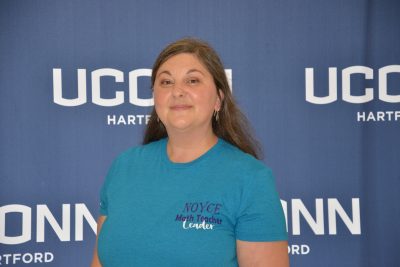
 As a Noyce MTL Fellow, Maureen engages in practitioner research that focuses on building student confidence and advancing equitable classroom practices. Her independent leadership projects (ILPs) include